Shea butter and tallow are two of the most talked-about "whole fat" skincare bases, and if you've researched natural moisturizers you've probably seen both recommended. They're not interchangeable, though — here's how they actually compare.
Where each one comes from
Shea butter is a plant fat pressed from the nut of the African shea tree. Tallow is an animal fat rendered from beef suet. That single difference — plant versus animal — shapes almost everything else about how the two behave on skin.
Fatty-acid profile: the real difference
The most meaningful comparison isn't source, it's composition. Grass-fed tallow's fatty-acid profile — heavy in oleic, palmitic, and stearic acids — closely tracks the fatty-acid profile of human sebum. Shea butter is also rich in oleic and stearic acid, but carries a higher proportion of other compounds (like unsaponifiables) that give it its characteristic thick, buttery texture and slightly different absorption behavior. Both are considered relatively skin-compatible, but tallow's specific ratio is the closer structural match to what your skin already produces. We break down the exact numbers on our Why Tallow Works Better page.
Texture and absorption
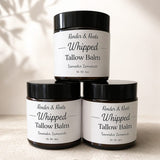
Shea butter on its own is thick and can feel heavy or take a while to sink in, which is why it's often whipped or blended with lighter oils in commercial products. Tallow, especially whipped the way we make it, tends to feel lighter on application and absorbs without the same greasy transition period — a texture difference many people notice immediately when switching between the two.
Vitamin content
Both carry fat-soluble vitamins, but the profiles differ. Grass-fed tallow naturally carries vitamins A, D, E, and K. Shea butter is particularly known for vitamin E and a range of plant compounds tied to its antioxidant reputation. Neither is objectively "more vitamin-rich" across the board — they simply carry different things.
Which one should you choose?
Some genuinely personal factors that might tip the decision:
- Want a plant-based product? Shea butter is the vegan option; tallow is not.
- Want the closest fatty-acid match to your own skin? Tallow's profile is the tighter match to human sebum.
- Prefer a lighter, faster-absorbing feel? Whipped tallow tends to sink in faster than straight shea butter.
- Have a tree nut allergy? Shea is botanically a tree nut, which occasionally matters for allergy-sensitive users — tallow carries no such risk since it's animal-derived, though as with any new product, patch testing is still worthwhile.
There's no wrong answer here — they're two legitimately different options built on different fats, and which one performs better for you comes down to your skin and your priorities, not a universal ranking.
See for yourself
If you've used shea-based moisturizers before and want to compare the feel of grass-fed tallow, the 2oz Scent Flight is a low-commitment way to try it side by side with what you're used to.